


US Blocks Gadgets With Huawei Chips: FCC Rule Explained
Introduction
Imagine buying a dashboard camera from a familiar brand, only to discover that a tiny chip hidden inside the device could determine whether it is allowed to enter the US market.
That is the issue behind a new technology policy action that could affect how electronic devices are designed, manufactured, and approved for sale in the United States.
Thank you for reading this post, don't forget to subscribe!
On October 22, 2026, the Federal Communications Commission (FCC) announced that it had prevented two devices—a dashboard camera and a wireless video transmitter—from being marketed or sold in the US because they contained chips made by HiSilicon, a subsidiary of Huawei. The agency described the components as surveillance-related chips and said they included facial-detection capabilities.
The action is significant because the FCC has begun enforcing a rule that extends certain restrictions beyond finished products made by listed companies to qualifying hardware components inside products made by other manufacturers.
But there is an important distinction: the announcement does not establish that the two devices were caught transmitting private information to China or that every product containing foreign-made chips is prohibited.
Here’s what happened, why it matters, and what consumers and electronics businesses should understand.
What Exactly Did the FCC Block?
The FCC’s Office of Engineering and Technology announced the action on October 22.
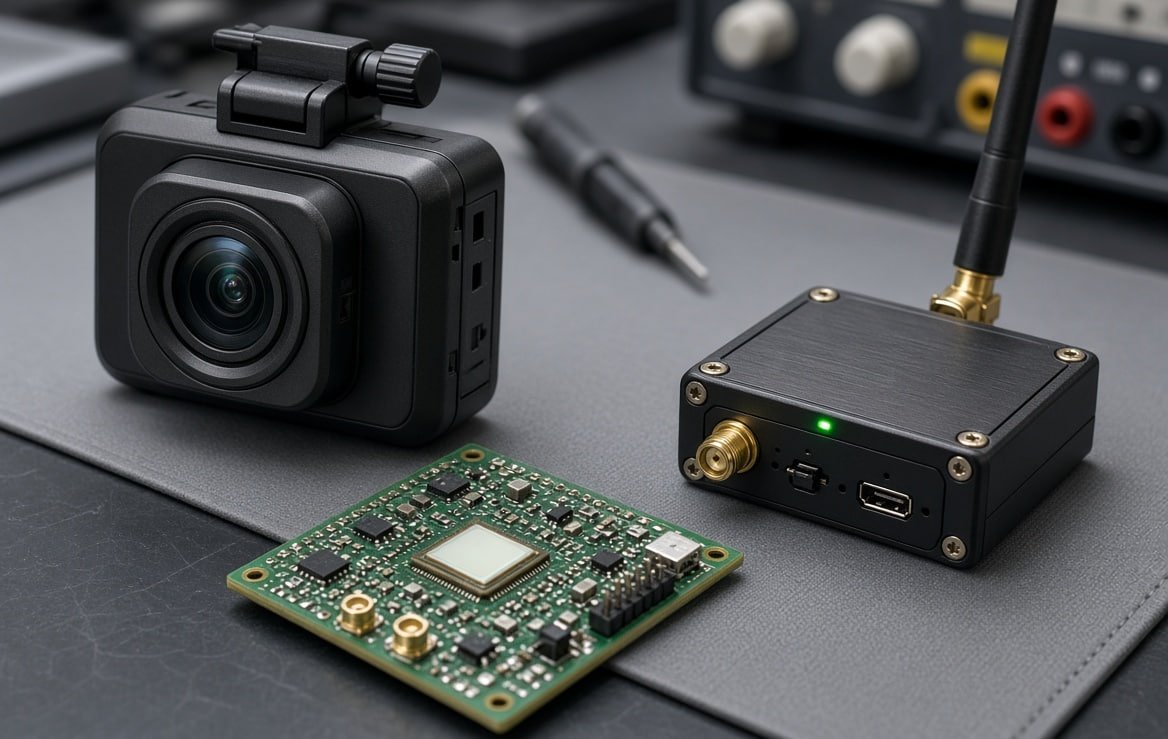
The two affected devices were:
- A dashboard camera.
- A wireless video transmitter.
According to the FCC, both contained chips manufactured by HiSilicon, which the agency identifies as a Huawei subsidiary. The FCC said HiSilicon markets its chip technology for surveillance applications and advertises built-in facial-detection algorithms.
The agency did not publicly identify the manufacturers or model numbers of the two devices in the announcement. Consequently, consumers cannot use the announcement alone to determine whether a particular dashboard camera or transmitter they own is one of the affected products.
The FCC’s action concerned whether the devices could obtain the necessary equipment authorization for the US market under the applicable restrictions.
This is different from announcing a recall of every previously purchased camera or ordering consumers to stop using all devices made with Chinese components.
The key point: The FCC blocked two specific devices. It did not announce a universal ban on all cameras, video transmitters, or electronics containing chips manufactured outside the United States.
Why Are Chips Inside Devices Becoming a Regulatory Issue?
Modern electronics are built from components supplied by multiple companies.
A single connected device might contain a processor from one manufacturer, a camera sensor from another, wireless communication hardware from a third, and software developed by yet another company.
The company selling the finished product may not manufacture every component itself.
Historically, restrictions on certain companies’ equipment could leave a potential gap: a different manufacturer might assemble a device using a restricted company’s component.
The FCC’s new rule addresses that issue for specified hardware.
The rule, published in the Federal Register on September 11, 2026, took effect on October 13. It prohibits authorization of certain devices containing qualifying logic-bearing hardware components produced by entities on the FCC’s Covered List, where the finished device would itself be prohibited from authorization if produced by that listed entity.
In plain English, the identity of the company that makes a qualifying chip can matter even when another company builds and sells the finished device.
This approach focuses on the component’s origin as well as the brand printed on the product.
What Is HiSilicon, and Why Is Huawei Involved?
HiSilicon is a semiconductor design company associated with Huawei.
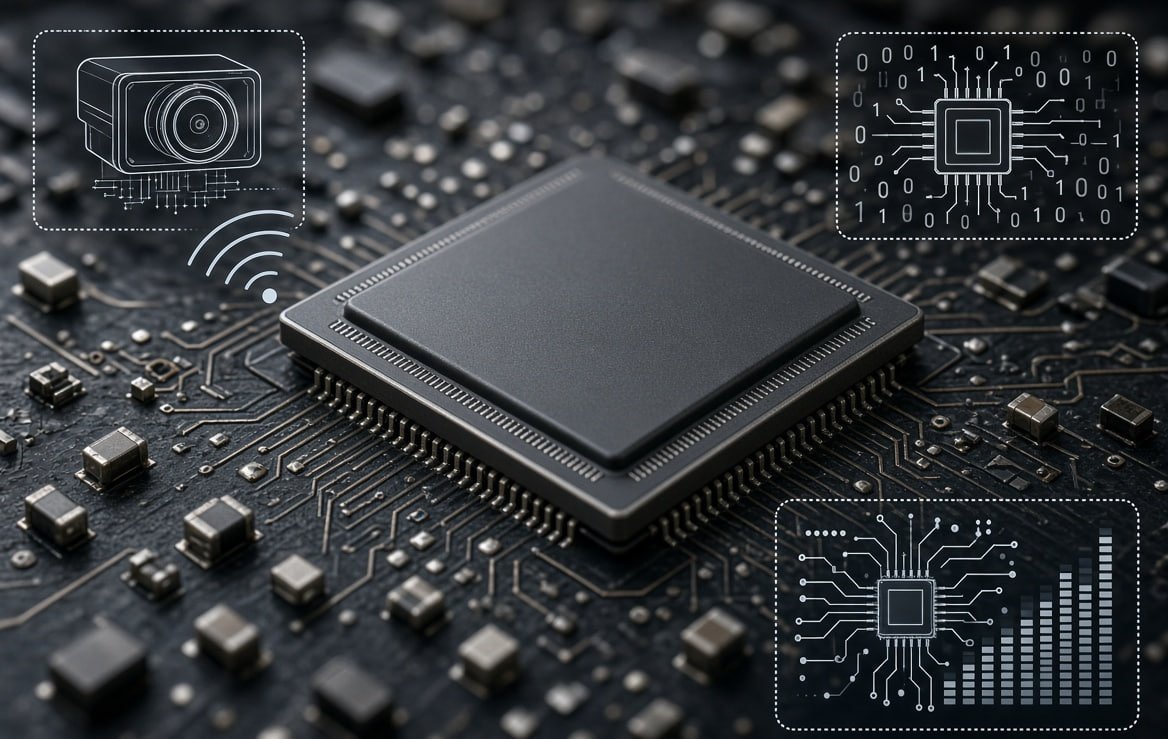
Semiconductor companies develop chips that perform essential tasks inside electronic devices. Depending on the design, these chips may process images, manage communications, run software, or perform other computing functions.
The FCC identifies Huawei as an entity on its Covered List and describes HiSilicon as its subsidiary. The agency’s announcement connects the two blocked devices to this restriction because of the components they contained.
The FCC’s concern centers on the potential security implications of restricted hardware, particularly components used in video and surveillance-related products.
However, the distinction between a potential security risk and proven misuse matters.
The public announcement does not establish that either device transmitted data to Huawei, that facial recognition was used to identify particular people, or that an actual espionage operation occurred through these products.
Those claims would require evidence beyond the fact that a device contains a restricted component.
You may Also Like : AI Discovered a Critical PHP Security Flaw: Why Website Owners Must Act Now
What Does the New FCC Rule Actually Do?
The FCC’s September rule changes the equipment authorization framework in several important ways.
1. It Covers Certain Components Inside Finished Products
The rule applies to qualifying logic-bearing hardware components produced by entities covered by the relevant Covered List restrictions.
The FCC says such components can potentially enable unauthorized access, interception, disruption, or sabotage, depending on the device and component involved.
The restriction is not a blanket prohibition on every part manufactured by a foreign company.
It depends on the component, the producer’s status under the Covered List, and the applicable authorization rules.
2. It Applies Prospectively to New Equipment Authorization Applications
The rule took effect on October 13, 2026, and applies prospectively to new equipment authorization applications.
According to the Federal Register, previously authorized equipment is not affected by this new component prohibition. Applications already pending on the effective date are generally exempt unless subsequently amended to add, substitute, or change a qualifying logic-bearing component.
This matters to existing consumers.
The announcement does not mean every device already in an American home has suddenly become illegal to own or use.
3. It Also Addresses Online Marketplace Listings
The FCC’s broader rule includes changes concerning the marketing of unauthorized equipment and the display of FCC identification numbers on online marketplaces.
The Federal Register establishes different compliance dates for marketplace FCC ID display requirements: March 1, 2027, for certain marketplaces that have physical access to or take title to the devices, and June 1, 2027, for certain third-party marketplace listings handled through seller certification. Exceptions apply.
These provisions are separate from the immediate announcement about the two blocked devices, but they show that the FCC’s changes extend beyond manufacturers to parts of the electronics sales process.
Does This Mean Chinese Electronics Are Automatically Banned?
No. That interpretation would be inaccurate.
The FCC rule is tied to particular Covered List determinations and qualifying hardware components. It does not establish a universal ban on every electronic product manufactured in China or every device containing a Chinese-made component.
For a product to fall within the restriction, the relevant requirements must be satisfied.
Consumers should also distinguish between where a product is manufactured and which company produced a particular component. Those are different questions.
A device assembled in the United States may contain internationally sourced parts. Conversely, a product manufactured overseas may contain components from several different suppliers.
The new rule focuses on specified components produced by entities covered by the relevant restrictions, rather than simply using a product’s country of assembly as the sole test.
That distinction is important for consumers, importers, electronics manufacturers, and retailers.
What Does This Mean for Dashboard Cameras and Wireless Devices?
Dashboard cameras and wireless video systems can contain processors that handle video capture, image processing, storage, and communication.
These functions make the underlying hardware important to how the device operates.
The FCC’s announcement is particularly relevant to businesses that design or import products containing advanced electronic components. They may need to pay closer attention to supplier identity, component documentation, and equipment authorization requirements.
For consumers, the practical implications are more limited.
The FCC has not named the affected device models in the cited announcement, so there is no reliable basis for creating a list of specific consumer products supposedly covered by this action.
Nor should buyers assume that every inexpensive camera or wireless transmitter is unsafe.
The announcement is best understood as a regulatory enforcement action involving two devices, rather than evidence that an entire category of consumer electronics is compromised.
What Should Consumers Do Before Buying Connected Electronics?
You do not need to stop buying dashboard cameras or wireless devices because of this news.
Instead, use a few sensible checks when evaluating connected electronics.
Check the Manufacturer and Model
Buy products from identifiable manufacturers that provide clear product specifications, documentation, and customer support.
Be cautious when a listing lacks a reliable manufacturer name, model number, or meaningful technical information.
Look for Applicable FCC Authorization Information
For devices that require FCC equipment authorization, check the available identification and product documentation.
An FCC ID can help identify an authorized device and locate associated records. However, an FCC ID alone is not a guarantee that a device is completely secure or free of privacy risks.
Review Privacy and Connectivity Features
Before purchasing a camera or wireless device, find out what information it collects, whether it connects to a cloud service, and what account or network permissions it requires.
If the device offers remote viewing or cloud storage, review the provider’s privacy policy and security settings.
Keep Firmware Updated
Install legitimate firmware and security updates supplied by the manufacturer.
Where available, enable multifactor authentication for associated accounts and use unique passwords.
Avoid Unsupported Security Claims
Do not assume that a product is spyware merely because it was manufactured overseas or uses an international component.
Likewise, do not assume that a product is secure simply because it is sold by a familiar retailer.
Evaluate available evidence, manufacturer documentation, security support, and the device’s actual behavior.
What Should Electronics Manufacturers and Retailers Do?
For businesses, the implications are more direct.
Manufacturers and importers should review the hardware components used in products that require FCC authorization and determine whether any relevant restrictions apply.
Practical steps include:
- Maintaining accurate supplier and component records.
- Reviewing whether hardware suppliers are covered by relevant restrictions.
- Checking equipment authorization requirements before submitting new products.
- Documenting component substitutions during product redesigns.
- Consulting qualified regulatory professionals when the status of a component is uncertain.
- Keeping product listings and authorization records accurate.
Retailers and marketplace operators should also review the FCC’s separate requirements concerning unauthorized equipment and FCC ID display deadlines.
These steps are not just paperwork. A component change that appears minor from an engineering perspective can have regulatory implications if it changes whether a product qualifies for authorization.
Companies should therefore integrate compliance checks into product development and supplier management rather than waiting until a finished product is ready for sale.
Could This Affect Other Types of Gadgets?
Potentially, yes—but the scope depends on the component and applicable rule.
The FCC’s framework covers qualifying logic-bearing hardware components, rather than only one type of camera. The agency’s rule describes a component-based restriction that can apply to eligible devices containing hardware produced by entities on the Covered List.
That means electronics companies should not assume the issue is limited to dashboard cameras.
At the same time, it would be premature to claim that a particular smartphone, home security camera, router, or drone is affected without evidence about its components and regulatory status.
Future enforcement actions may clarify how the FCC applies the rule to different product categories.
For now, the October 22 announcement provides a concrete example of the new framework being used against two devices.
Frequently Asked Questions
Which two devices did the FCC block?
The FCC identified a dashboard camera and a wireless video transmitter. The agency did not publicly name the manufacturers or model numbers in its announcement.
Why did the FCC block the devices?
The FCC said the devices contained chips produced by HiSilicon, a Huawei subsidiary, and linked those components to its restrictions on hardware from entities on the Covered List.
Does this mean Huawei hacked the devices?
The announcement does not establish that Huawei hacked either device or that the devices transmitted private data to the company. The action concerned regulatory restrictions on the components and the devices’ eligibility for authorization.
Is every product with a Chinese-made chip banned in the United States?
No. The rule applies to specified categories of components produced by entities covered by the relevant restrictions. It is not a universal ban on every Chinese-made component.
Are devices already purchased by consumers affected?
The new component prohibition applies prospectively to new equipment authorization applications and does not invalidate previously authorized equipment under this rule. Consumers should not assume their existing devices are illegal simply because of this announcement.
How can I check whether an electronic device has FCC authorization?
Look for the applicable FCC ID in the product documentation or listing, then consult the FCC’s equipment authorization records. Remember that authorization information is not a complete assessment of a product’s cybersecurity or privacy.
Final Thoughts
The FCC’s decision to block a dashboard camera and a wireless video transmitter marks an important step in its new approach to electronic hardware restrictions.
Rather than focusing only on products made by companies on its Covered List, the agency is now enforcing rules that can also reach qualifying components inside products made by other manufacturers.
For electronics companies, this increases the importance of component traceability and regulatory checks. For consumers, the main lesson is to evaluate products carefully without treating every foreign-made device as a security threat.
The most important distinction is between a regulatory restriction and proof of malicious activity. The FCC identified a component-related national security concern, but the public announcement does not establish that the two devices were used for spying.
As the rule is applied to more products, the details of future enforcement actions will help clarify how broadly it affects the connected-electronics market.
Sources and Further Reading
- Official FCC announcement: FCC Blocks Two Devices Containing Foreign Surveillance Chips
- Official rule in the Federal Register: FCC Equipment Authorization Rule — September 11, 2026
- Reuters reporting: US Blocks Two Devices With Chinese-Made Surveillance Chips
- The Verge analysis: The FCC Is Beginning to Block Gadgets With Foreign Surveillance Chips
Disclaimer
This article is for informational and educational purposes only. It summarizes publicly reported regulatory developments and does not constitute legal or cybersecurity advice. FCC requirements and product authorization status can change. Manufacturers, importers, and retailers should consult the official rule and qualified regulatory professionals before making compliance decisions.