



Amazon Just Cleared a Major Hurdle for Satellite-to-Phone Connectivity
Imagine driving through a remote national park, hiking miles away from the nearest town, or traveling through an area where your phone suddenly shows “No Service.”
Now imagine being able to send a message without relying on a nearby cell tower.
Thank you for reading this post, don't forget to subscribe!
That is the promise behind the next phase of satellite connectivity—and Amazon has just taken an important step toward making it a bigger part of the mobile communications market.
On October 27, 2026, the Federal Communications Commission (FCC) approved Amazon Leo’s approximately $11.5 billion acquisition of satellite communications company Globalstar. The approval advances Amazon’s effort to expand beyond satellite broadband and develop services that can connect compatible mobile devices directly to satellites.
The deal also matters to Apple users because Globalstar currently supports satellite features on compatible iPhones and Apple Watches. Amazon has announced an agreement with Apple to continue supporting those services.
However, this is not a feature that suddenly becomes available on every smartphone tomorrow. The acquisition still needs to close, and Amazon’s next-generation direct-to-device satellite system is planned to begin deployment in 2028.
Here’s what the FCC decision means, how the technology works, and what consumers should realistically expect.
What Exactly Did the FCC Approve?
The FCC approved the transfer of Globalstar’s relevant licenses and authorizations to Amazon, clearing a major regulatory hurdle for the acquisition. Reuters reported the approval on October 27.
Globalstar operates a low-Earth-orbit satellite network and holds mobile-satellite spectrum licenses. Those assets are important to Amazon’s plan to develop satellite connectivity for mobile devices.
The transaction brings together two different capabilities:
- Amazon Leo’s growing satellite broadband network.
- Globalstar’s existing satellite operations, infrastructure, and mobile-satellite spectrum.
Amazon announced the acquisition agreement on April 14, 2026. The company said the transaction was expected to close in 2027, subject to remaining conditions. The FCC approval is therefore a significant milestone, not confirmation that the acquisition has already been completed.
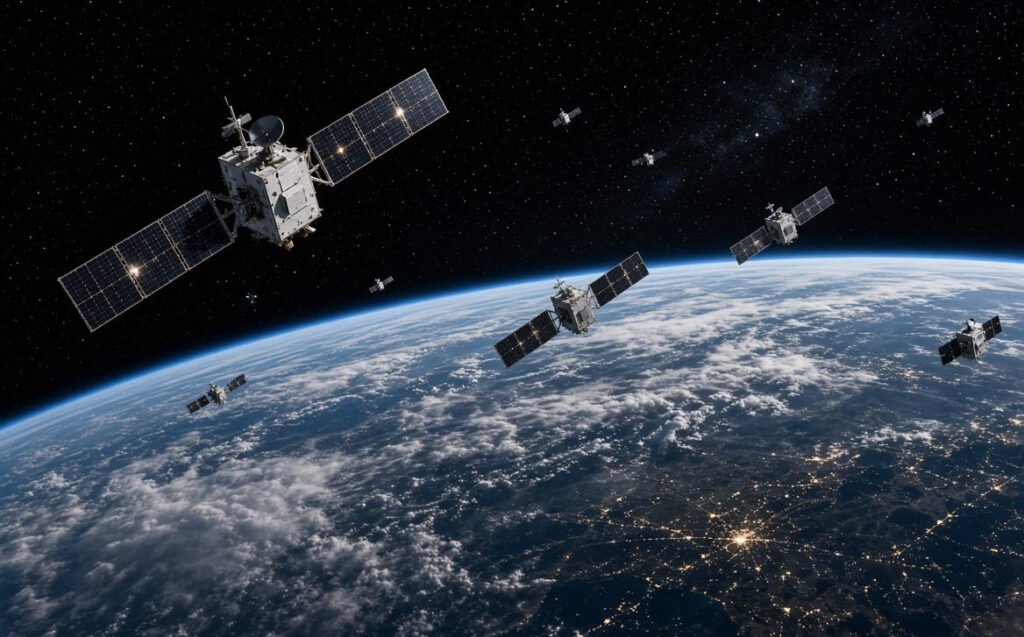
According to Reuters, Amazon Leo had launched nearly 400 satellites since April 2025 and planned to deploy thousands more in low Earth orbit by 2029.
The broader ambition is to build a satellite communications business that can serve homes, businesses, government customers, and eventually compatible mobile devices.
What Is Amazon Leo?
Amazon Leo is Amazon’s low-Earth-orbit satellite network, previously known as Project Kuiper.
Its initial focus is satellite broadband: delivering internet access to customers who may have limited access to traditional wired or wireless infrastructure.
Instead of depending entirely on a nearby cell tower or a fiber connection to the home, a customer uses compatible equipment to communicate with satellites passing overhead. Those satellites connect through a wider network that includes ground infrastructure.
Amazon is building Leo to compete in a market where SpaceX’s Starlink already has a substantial head start.
The Globalstar acquisition gives Amazon a path to expand into a related but different market: direct-to-device connectivity, where supported mobile devices communicate with satellites without needing a separate traditional satellite phone.
That distinction is essential. Satellite broadband equipment and direct-to-device smartphone service are not interchangeable products.
How Does Satellite-to-Phone Connectivity Work?
Traditional cellular networks rely on ground-based infrastructure. Your phone communicates with a nearby cell site, which connects you to the wider mobile network.
When you move beyond the network’s coverage area, the connection may disappear.
Direct-to-device satellite technology aims to fill some of those gaps by allowing compatible devices to communicate with satellites orbiting Earth.
Step 1: Your phone needs compatible technology
A phone must support the relevant satellite service and radio technology. Compatibility depends on the device, its hardware, supported spectrum, software, and the service provider’s arrangements.
This means an ordinary smartphone will not automatically gain satellite connectivity just because Amazon acquires Globalstar.
Step 2: The phone communicates with a satellite
When terrestrial coverage is unavailable, a supported device may be able to establish a connection with a suitable satellite, subject to the service’s technical requirements and coverage.
Satellite communication has to deal with long distances, limited radio resources, and the movement of satellites overhead.
Step 3: The satellite network routes the communication
Satellites, ground stations, and other network infrastructure work together to deliver the communication to its destination.
The exact process depends on the system’s design, the available spectrum, and the type of service being provided.
The goal is to extend connectivity into areas where building conventional cell infrastructure may be difficult or uneconomical.
Also Read : US Blocks Two Gadgets Over Huawei Chips: What the New FCC Rule Means for Electronics
Could Amazon Help Eliminate Cell Phone Dead Zones?
Potentially, but it is too early to say that every dead zone will disappear.
Amazon’s acquisition of Globalstar supports its plans to expand satellite connectivity beyond traditional broadband. The company says its future direct-to-device system is intended to provide voice, messaging, and data services to compatible mobile devices outside terrestrial network coverage.
That could be useful in several situations.

Rural communities
Some rural areas are expensive to cover with conventional cellular infrastructure because homes and roads are spread across large distances.
Satellite-based services could provide another option for extending connectivity, although actual performance will depend on deployment, coverage, capacity, and partnerships with mobile operators.
National parks and outdoor recreation
Hikers, campers, and travelers often enter places where cellular coverage is limited or nonexistent.
Satellite messaging and emergency communication can be valuable in these situations, provided the device supports the feature and the user follows the service’s operating requirements.
Disaster response
Hurricanes, wildfires, floods, and other disasters can damage cell towers or interrupt power and backhaul connections.
Satellite connectivity can provide an additional communication path when terrestrial networks are disrupted. It is not a guarantee of uninterrupted service, but it may strengthen communications resilience.
Remote businesses
Agriculture, transportation, maritime operations, and remote industrial sites can benefit from connectivity where conventional networks are unavailable or unreliable.
For these customers, satellite communication may help with messaging, monitoring, coordination, and other connected-device applications.
Why the Globalstar Deal Matters for iPhone Users
One of the most important parts of the announcement concerns Apple.
Globalstar currently supports satellite services on compatible Apple devices, including Emergency SOS via satellite and other features. Amazon and Apple have announced an agreement for Amazon Leo to continue supporting satellite connectivity for supported iPhone and Apple Watch models.
That matters because emergency satellite features are not simply experimental concepts. They are already available on supported devices in eligible regions and circumstances.
The acquisition gives Amazon a larger role in the infrastructure behind these services and creates an opportunity for future satellite capabilities.
However, users should not assume that an existing feature will immediately change, become faster, or work in every location following the FCC decision.
The companies’ agreement is intended to support continuity and future development. Any new features, coverage changes, device requirements, or pricing arrangements will depend on subsequent product and service announcements.
Practical takeaway: If you already own a supported iPhone or Apple Watch, check Apple’s current satellite-feature documentation rather than buying new hardware based on expectations about Amazon’s future network.
Amazon vs. Starlink: The Satellite Competition Is Heating Up
Amazon’s move is also a competitive challenge to SpaceX’s Starlink.
Starlink already operates a large satellite network and offers satellite broadband services. Amazon is building its own Leo network while using Globalstar’s assets to pursue mobile-satellite connectivity. Reuters reported that Starlink had more than 11,000 satellites in its network at the time of the FCC approval announcement.
The companies have overlapping ambitions, but their networks and services should not be treated as identical.
| Feature | Amazon Leo | Starlink |
|---|---|---|
| Satellite broadband | Building its service and network | Established commercial service |
| Direct-to-device plans | Planned system using Globalstar assets and spectrum | Developing satellite-to-mobile capabilities |
| Existing Apple satellite services | Agreement to continue supporting compatible features | Not the current provider of Globalstar-based Apple satellite features |
| Main challenge | Scaling satellites, coverage, and services | Expanding capacity and mobile connectivity while maintaining service quality |
The table summarizes broad strategic positions, not a guarantee of equal coverage or performance.
Competition could encourage companies to invest in better technology, expand availability, and develop more flexible connectivity options. But consumers will still need to compare coverage maps, supported devices, prices, and service limitations before choosing a provider.
When Will Amazon’s Satellite-to-Phone Service Launch?
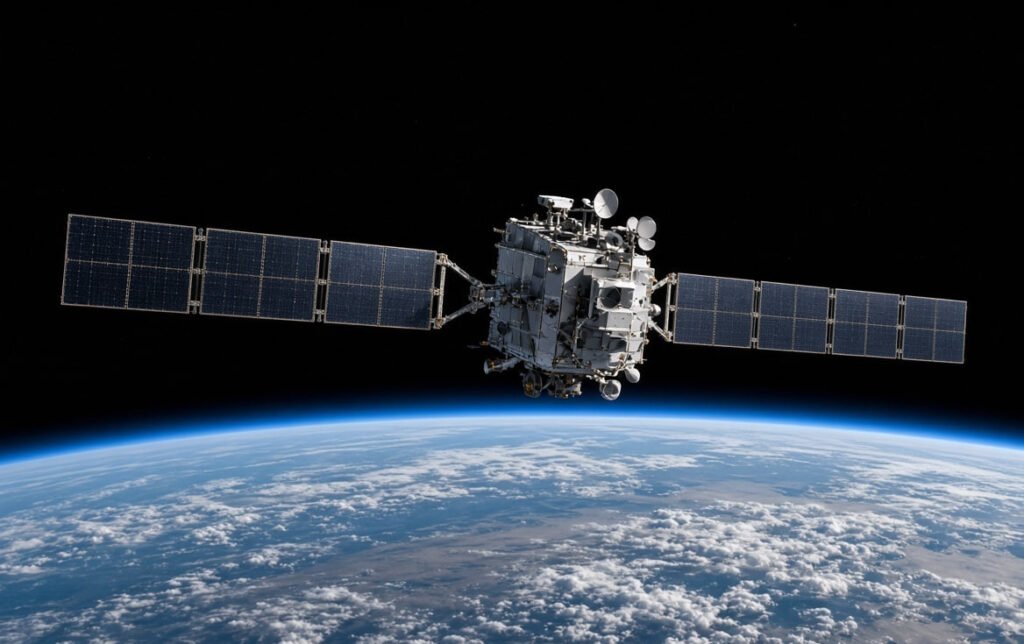
Amazon announced that deployment of its next-generation direct-to-device satellite system is planned to begin in 2028. It has also proposed a constellation of up to 5,105 satellites for direct-to-device connectivity.
That is a future deployment plan, not a promise that all customers will receive service in 2028.
Building a satellite network is a complex process involving spacecraft manufacturing, launches, spectrum coordination, ground infrastructure, regulatory approvals, and commercial partnerships.
Amazon also plans to work with mobile network operators to extend services beyond conventional cellular coverage. The availability of particular features will therefore depend on more than the number of satellites in orbit.
There is another important distinction: FCC approval of the Globalstar acquisition does not itself mean Amazon has received every authorization required for its proposed direct-to-device constellation.
Consumers should look for confirmed launch schedules, supported devices, service availability, and pricing before making purchasing decisions.
What Should Smartphone Users Do Right Now?
The practical advice is simple: do not rush to replace your phone because of this news.
Check your current satellite features
If your device supports satellite emergency communication, learn how to activate it and understand the conditions under which it works.
Do this before traveling into remote areas, not during an emergency.
Download offline essentials
Keep offline maps, important contact information, travel details, and emergency instructions accessible without an internet connection.
Satellite connectivity can be helpful, but it should not be your only emergency plan.
Understand your carrier’s coverage
Review your mobile provider’s coverage map and any available satellite-service partnerships. A company’s future network plan is not the same as service currently available to your phone.
Avoid buying products based on future promises
Wait for official device compatibility lists, pricing, and launch details before paying extra for a phone or accessory based on expected satellite features.
What Happens Next?
The acquisition approval is one step in a larger series of developments.
First, Amazon and Globalstar must complete the remaining transaction requirements, with closing expected in 2027 according to the original announcement.
Second, Amazon must continue developing its direct-to-device system and securing the necessary regulatory permissions.
Third, the FCC is scheduled to consider advancing a separate wireless-spectrum auction intended to support direct-to-device satellite services on October 29, 2026. This is a separate regulatory proceeding from the Globalstar acquisition approval.
These developments will help determine how quickly satellite-to-phone connectivity expands and which companies can deliver useful services at scale.
Frequently Asked Questions
Has Amazon completed the Globalstar acquisition?
No. The FCC approved the relevant transfer of licenses and authorizations on October 27, 2026, but the transaction was expected to close in 2027, subject to remaining conditions.
Will Amazon satellite internet work on every smartphone?
No. Satellite broadband and direct-to-device service have different requirements. Smartphone connectivity depends on compatible hardware, network capabilities, regulatory approvals, and service availability.
Will my iPhone’s Emergency SOS stop working because Amazon is acquiring Globalstar?
Amazon and Apple announced an agreement intended to continue supporting satellite services on compatible iPhones and Apple Watches. Users should continue to follow Apple’s official documentation for current availability and device requirements.
Is Amazon Leo the same as Starlink?
No. Both involve low-Earth-orbit satellite networks, but they are separate systems with different deployment plans, infrastructure, and service offerings.
When will Amazon’s direct-to-device service launch?
Amazon has said deployment of its next-generation direct-to-device satellite system is planned to begin in 2028. Actual service availability will depend on deployment and other technical and regulatory requirements.
Will satellite connectivity replace cellular networks?
Not necessarily. Satellite systems are more likely to complement terrestrial networks by providing connectivity where cell towers are unavailable or when conventional infrastructure is disrupted.
Final Thoughts
Amazon’s Globalstar acquisition approval is an important development in the race to connect more devices through satellites.
The opportunity goes beyond delivering internet to homes in remote locations. Direct-to-device technology could eventually help compatible phones maintain limited connectivity beyond traditional cellular coverage, improve emergency communications, and give mobile operators another way to reach underserved areas.
But there is still work to do.
The acquisition has not yet closed, the next-generation mobile satellite network is planned for 2028, and not every smartphone will automatically support the service.
For consumers, the smartest move is to understand the satellite features already available on their devices and watch for confirmed service details.
For the industry, the bigger story is that satellite connectivity is becoming a more important part of the future communications market—and Amazon now has a clearer path to compete.